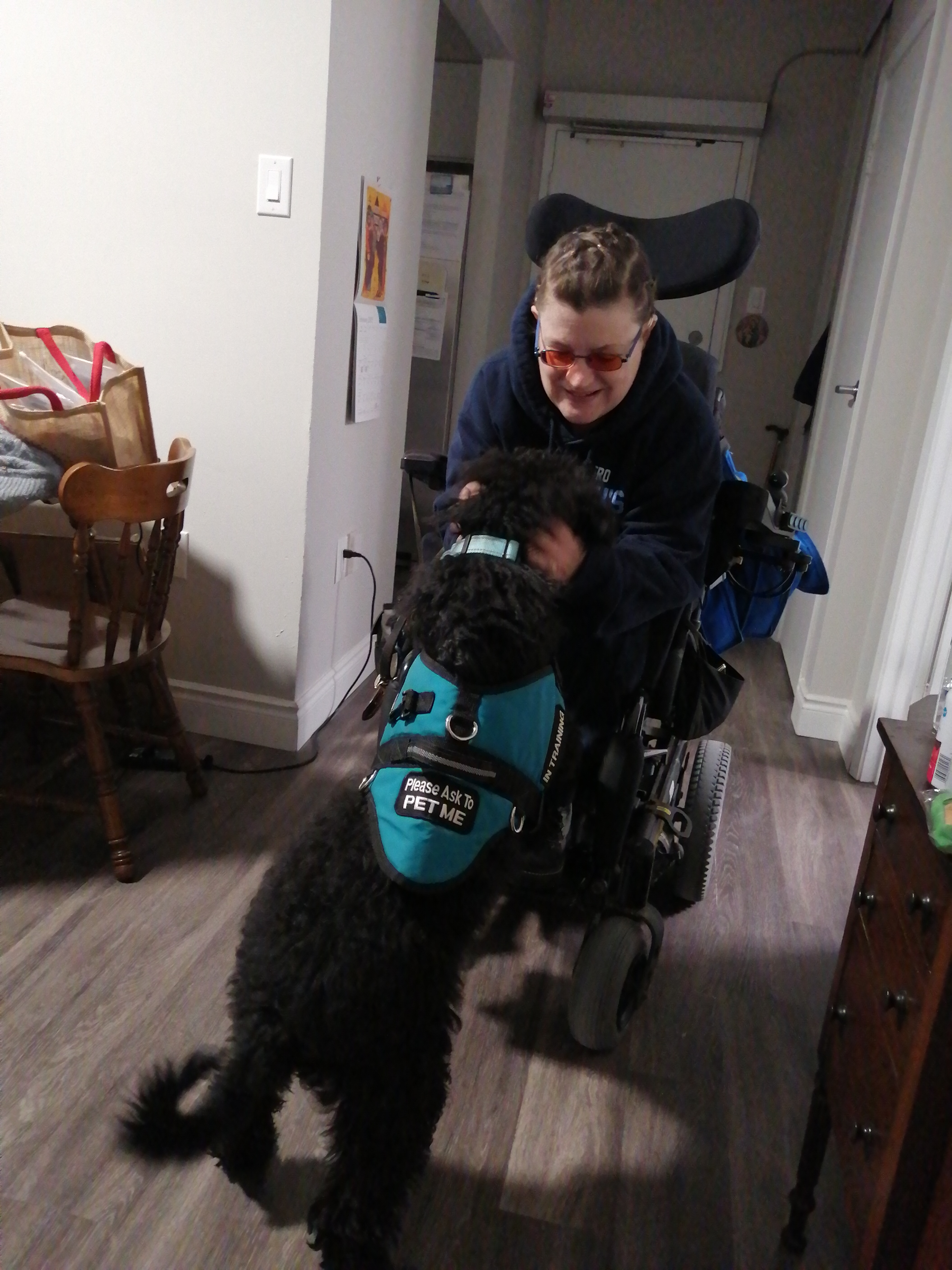
It is equally important to never assume what another person thinks. To avoid assumptions, friendships need to be formed. The more someone gets to know the disabled person, the better they will understand how the individual sees themselves, including both negative and positive emotions.
Inclusion is a ministry towards disabled people as well as their family members who may by default have become caregivers. Even if the disabled person receives community support for their daily living needs, in the end, the family and/or close friends carry a lot of weight on their shoulders. As people begin talking to each other, they will learn each other’s worries and concerns, as well as the possible feeling of burnout that may affect family members and spouses. Church members can learn how to help family and close friends to help take off some of this weight they carry, to become like Simon of Cyrene, and help them to carry their cross. It is important to remember the cross they bear is not the disabled family member, it is the domino effects within the family dynamics that is their cross.
A comparison of the domino effect that many people can relate to, is a when a person is diagnosed with cancer. It affects the entire family as well as their close friends due to the illness itself, procedures, medications, and surgeries it involves. Scheduling doctor and other medical appointments, recovering from surgery and the daily care the individual requires affects the entire inner circle of people who have been diagnosed with cancer.
The example of when cancer hits a family, also applies to families with a disabled child or spouse. As a disability is the result of a medical condition, medical appointments, and procedures, physiotherapy, occupational therapy to learn how to use adaptive mobility and/or communication devices become part of a disabled person’s daily living. All these things may appear burdensome to others, but they are a part of a disabled person’s daily life and yes, these appointments can take a toll on the person and their family members. Therefore, it is important for the Church to remember these things when it comes to ministry of inclusion and it must address the person first, not the disability. This information is a fast-track education on the generalities involved with the lives of many disabled people and their families and assists non-disabled Church members to have a more well-rounded understanding of their fellow members’ daily lives.
❤️🙏🤟🏼

 Dr Kelly Fleming
Leave a comment