-
Inclusion in the Church – Part 15
The Church has over time and not necessarily on purpose, become exclusive. When a visitor enters the Church building, although they may be warmly welcomed, there is an invisible curtain that divides the member and the visitor – the “us” and “them.” Through Church history, exclusion has reigned dominate. It has only been in the Continue reading
-
Inclusion in the Church – Part 14
The Church needs to reclaim this valuable treasure that God has provided. Every effort toward inclusion of disabled people in the Church must be tapped into. There are many well educated disabled people in theology, but their knowledge is not accepted or shared as they are faced with discrimination by the Church and in positions Continue reading
-
Inclusion in the Church – Part 13
God, who said that He chooses who will be disabled and does so to use them for His own purposes has been ignored. In the Old Testament, we see God using disabled people such as Moses to show His strength and power to the world. Disabled people have a strong, united voice that needs to Continue reading
-
Inclusion in the Church – Part 12
St. Lawrence of Rome (225-258) provides us with an extraordinary message of the great treasures of the Church. He was one of the seven deacons serving in Rome under Pope Sixtus II. He was called before the Roman Emperor Valerian during the time when Christians were being massacred for their faith in Christ. The emperor Continue reading
-
Inclusion in the Church – Part 11
When we look back at the Great Banquet explained in detail in Luke chapter 14, we are forced to ask ourselves if our Church building exemplifies the Great Banquet for full inclusion of disabled people. In Christ, we all belong to a tremendous international and eternal family. God wants us to make His Church barrier-free Continue reading
-
Inclusion in the Church – Part 10
There are individuals who have severe allergies which disable them from partaking of potluck lunches after Church services. Many people with an invisible disability due to food severe food allergies do not participate in after-service gatherings due to the risk of being exposed to an allergen that could be life-threatening. Food needs to include allergen Continue reading
-
Inclusion in the Church – Part 9
The Church needs to become aware of assistive aids that help disabled people become included in services and social gatherings as well as things that are barriers for accessibility. Basic accessibility includes, but is not limited to, the following: 1) ramped access, 2) an audio induction loop installed in the church and regular checks to Continue reading
-
Inclusion in the Church – Part 8
Many Church buildings are structurally designed in a way that is representative of the Temple in Jerusalem. When we step back and look at how the building has been constructed, its architecture and furnishings, it is vital that we consider how this building, constructed in visual beauty has erected barriers for disabled people. Change only Continue reading
-
Inclusion in the Church – Part 7
An important point to emphasize and remember is that a person should never ask direct questions to a person regarding their disability. The disabled person or a parent of a disabled child will choose what information to share and when to share it. Questions regarding immediate issues to accessibility and communication methods are appropriate to Continue reading
-
Inclusion in the Church – Part 6
Sometimes inclusion is not about meeting a new person who is disabled but rather it is about a spouse or friend who acquires a permanent disability. The non-disabled spouse or friend may have difficulties in adapting their thoughts and may even unknowingly change their attitude towards their disabled spouse or friend which places an invisible Continue reading
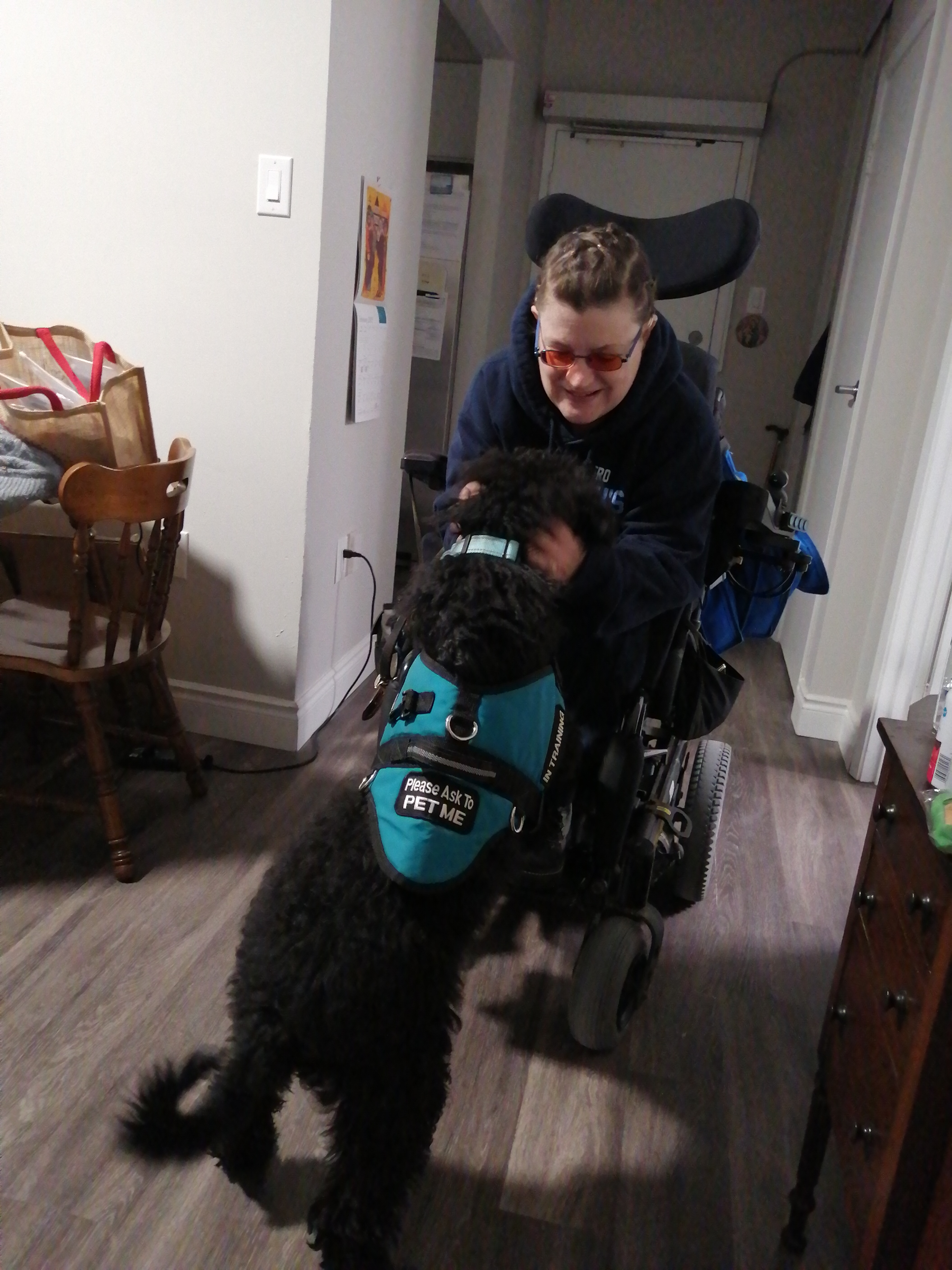
 Dr Kelly Fleming